FOLKFARO — Festival Internacional de Folclore
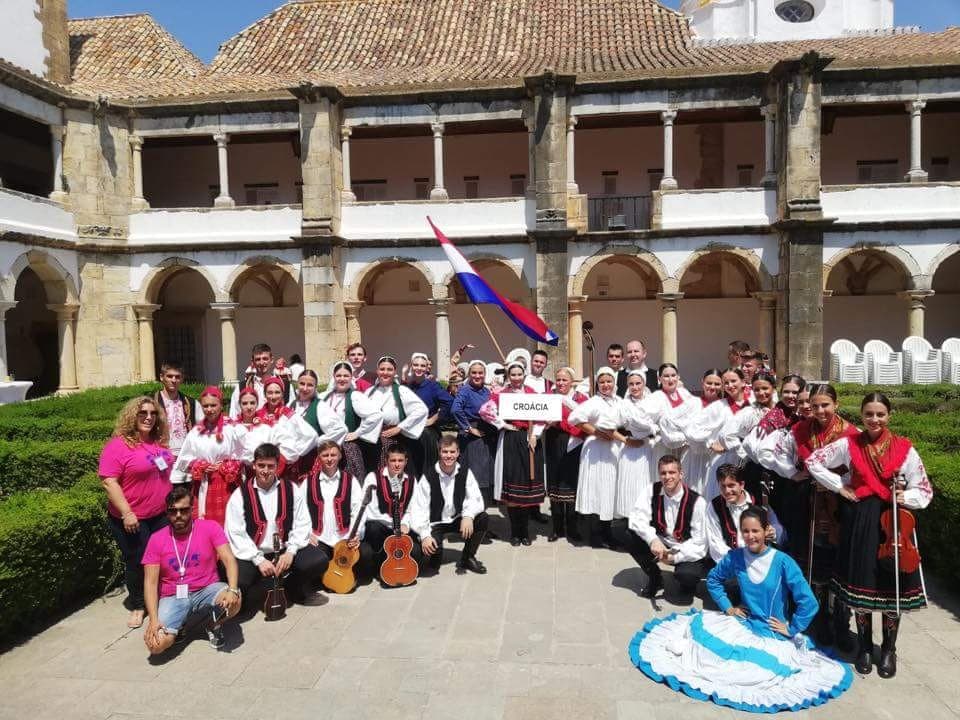
FOLKFARO is Faro's international folk festival: every August, Portuguese ranchos and guest groups from several countries fill the pedestrian baixa and the marina front with regional costumes, accordion and corridinho. Free access in the open spaces of the centre, parades in the late afternoon, and performances that kick off at night, never under the midday sun.
What it is, and why folklore is still alive here
FOLKFARO is an international folklore gathering organised by the Grupo Folclórico de Faro since 2003, with support from the city council; the 2026 edition was the 22nd, running 16-22 August, with groups from seven countries (Brazil, Cyprus, Slovakia, France, Italy, Nicaragua and Kenya) alongside the host. This isn't a tourist re-enactment: in the Algarve, the rancho folclórico is still a neighbourhood association that rehearses all year round, and what you'll see on stage is genuine Algarve corridinho, accordion and adufe, with real regional dress. A word of honest advice: if you're expecting a theatre-style show with numbered seats and hushed silence, you've got the wrong idea. This is community folklore, with uneven quality between groups and long blocks; it's best enjoyed by dropping in for a while, not sitting through the whole programme. The festival also decentralises part of the schedule to Loulé, Olhão, São Brás de Alportel, Tavira and Castro Marim.
How it actually plays out: stage, parades and real timings
The action is concentrated in a short, walkable stretch: Jardim Manuel Bívar (between the Arco da Vila, the marina and the start of Rua de Santo António), the baixa, and the Passeio da Doca, where the stage goes up right by the water. In 2026 the opening gala was held at the Teatro das Figuras at 21:30, with daily performances at the Passeio da Doca at 22:00, plus a flag-raising and the Planting of the Friendship Tree the following morning, and an ecumenical celebration at the Sé on the final day. Our own tip, not an official detail: arrive 20-30 minutes before 22:00, since the Passeio da Doca is an open space with no assigned seating and the good viewing spots go fast. As for the parades through the baixa, no route or timings are published anywhere we could find: they take place across the week, with occasional street closures. Check the official programme from the Grupo Folclórico de Faro and the Câmara Municipal before planning your evening around them.
Faro in August: heat, prices, and getting around without a car
August in Faro is peak season, full stop: 32-35°C at midday, a packed baixa, and accommodation prices at their highest. That's exactly why the festival happens at night and outdoors; there are no daytime performances, and the centre becomes a white-stone oven. Plan your day back to front: a siesta or the Ria Formosa in the afternoon, a late dinner, and the stage at 22:00. On the food side: cataplana, xerém with conquilhas, grilled sardines, almond-and-fig sweets, ice-cold Sagres beer, and medronho to finish. You're better off without a car: the train and bus stations are a 5-10 minute walk from Jardim Manuel Bívar and the Passeio da Doca, and the airport connects to the baixa by city bus or taxi in a short ride (check routes and frequency at cm-faro.pt). The costly mistake is driving in — finding parking near the centre on an August evening will cost you forty wasted minutes.
What to pair it with, and common mistakes
With the stage not starting until 22:00, you've got the whole day free. The Cidade Velha beyond the Arco da Vila (Sé included) is best explored slowly in the morning; in the afternoon, a boat trip through the Ria Formosa or a quick escape to Ilha Deserta — which departs right from the harbour front — will get you back before dark. On prices, let's be clear: the Teatro das Figuras gala is ticketed (box office, BOL, FNAC, Worten); for the Passeio da Doca performances and street entertainment, we haven't found a published price, so check the official programme. Classic mistakes: assuming it's a beach festival — Praia de Faro is 9 km away, on Ilha de Faro, reached by car, bus or boat; showing up at nine in the morning expecting atmosphere; and confusing it with the Concentração Internacional de Motos (July, in Vale das Almas, on the outskirts and not walkable) or the Festival F (September, in Vila Adentro, ticketed). These are three separate things.
Frequently asked questions
When is FOLKFARO held?
Do you need a ticket?
What time does it really start?
Can you visit without a car?
Some links on this page are affiliate links: if you book through them, Andelaria may earn a commission at no extra cost to you. Transparency & affiliate policy
Book tickets and tours: FOLKFARO — Festival Internacional de FolclorePlan your trip
Book the essentials for your trip to Faro.
Other places in Faro
Sé Catedral de Faro
catedralA 13th-century Gothic-Renaissance cathedral built over a former Arab mosque, with a climbable bell tower offering views over the Ria Formosa and the old town. Inside, Baroque azulejos mix with a gilded organ and a small necropolis. It's Faro's most photographed monument.
Arco da Vila
puertaA monumental neoclassical marble gate built in 1812 over the remains of an old Arab gateway, the main entrance into Faro's walled Cidade Velha. A pair of storks — the city's symbol — regularly nests atop the arch. It marks the start of the pedestrian historic quarter.
Cidade Velha (Casco Antiguo de Faro)
barrioA walled neighbourhood of Arab and Roman origin, with cobbled streets, whitewashed buildings, the Sé Cathedral and the Paço Episcopal. Its medieval walls still ring part of the enclosure. It's the oldest and best-preserved historic core in the Algarve.
Igreja do Carmo y Capela dos Ossos
iglesiaAn 18th-century Baroque church with a gilded carved facade and, in its rear courtyard, the unsettling Capela dos Ossos, its walls covered with the bones and skulls of more than a thousand Carmelite monks exhumed in the 19th century. One of only two bone chapels in Portugal.
Parque Natural da Ria Formosa
parqueA system of lagoons, channels, dunes and barrier islands stretching along the coast at Faro, a key habitat for flamingos and the endangered Mediterranean chameleon. Boats leave from the harbour for sandy islands such as Ilha Deserta and Ilha de Faro. A nature reserve of internationally recognised importance.
Museu Municipal de Faro (Museu Arqueológico Infante D. Henrique)
museoHoused in the former 16th-century Convento de Nossa Senhora da Assunção, it holds the Roman Oceanus mosaic, artefacts from ancient Ossonoba and religious art. The Renaissance cloister is itself one of Faro's architectural gems.
Feira de Santa Iria
fiestaFaro's patron saint fair traces back to 1596, when the Earl of Essex sacked and burned the city, forcing it to bounce back with a tax-free open fair. It still runs at Largo de São Francisco in the second half of October: crafts, food stalls, loud rides, and free entry to the grounds.
Festival F
fiestaFestival F takes over Faro's old town: the baixa and the walled Cidade Velha fill with named stages (Arco, Sé, Museu, Ria) in early September. It's a paid event — day or festival pass via Ticketline — and it bills itself as "o último grande festival de verão," Portugal's last big summer send-off.
Similar places in other cities
Carnaval de Cádiz
CádizCádiz Carnival is officially recognized as a Fiesta of International Tourist Interest, and it has nothing to do with float parades. Here, the coupla song rules. Two carnivals run in parallel: the official contest (COAC) at the Gran Teatro Falla, ticketed, and the street carnival, free and stageless, where the so-called "illegal" groups sing on any corner.
Semana Santa de Cádiz
CádizAbout 30 brotherhoods make their official penitential walk to Cádiz Cathedral, and the whole official route fits inside the old town: Calle Nueva, San Juan de Dios, Pelota and Plaza de la Catedral. The date moves every year, from Palm Sunday to Easter Sunday. Watching the processions from the street costs nothing.
Semana Santa de Sevilla
SevillaSeville's Holy Week is free and open to all: you only pay for seats and grandstands along the Official Route. In 2026 it runs from 29 March to 5 April, with the eve celebrations on the 27th. Its peak is La Madrugá, when five major brotherhoods process from 1:00 a.m. until noon.