Carnaval de Cádiz
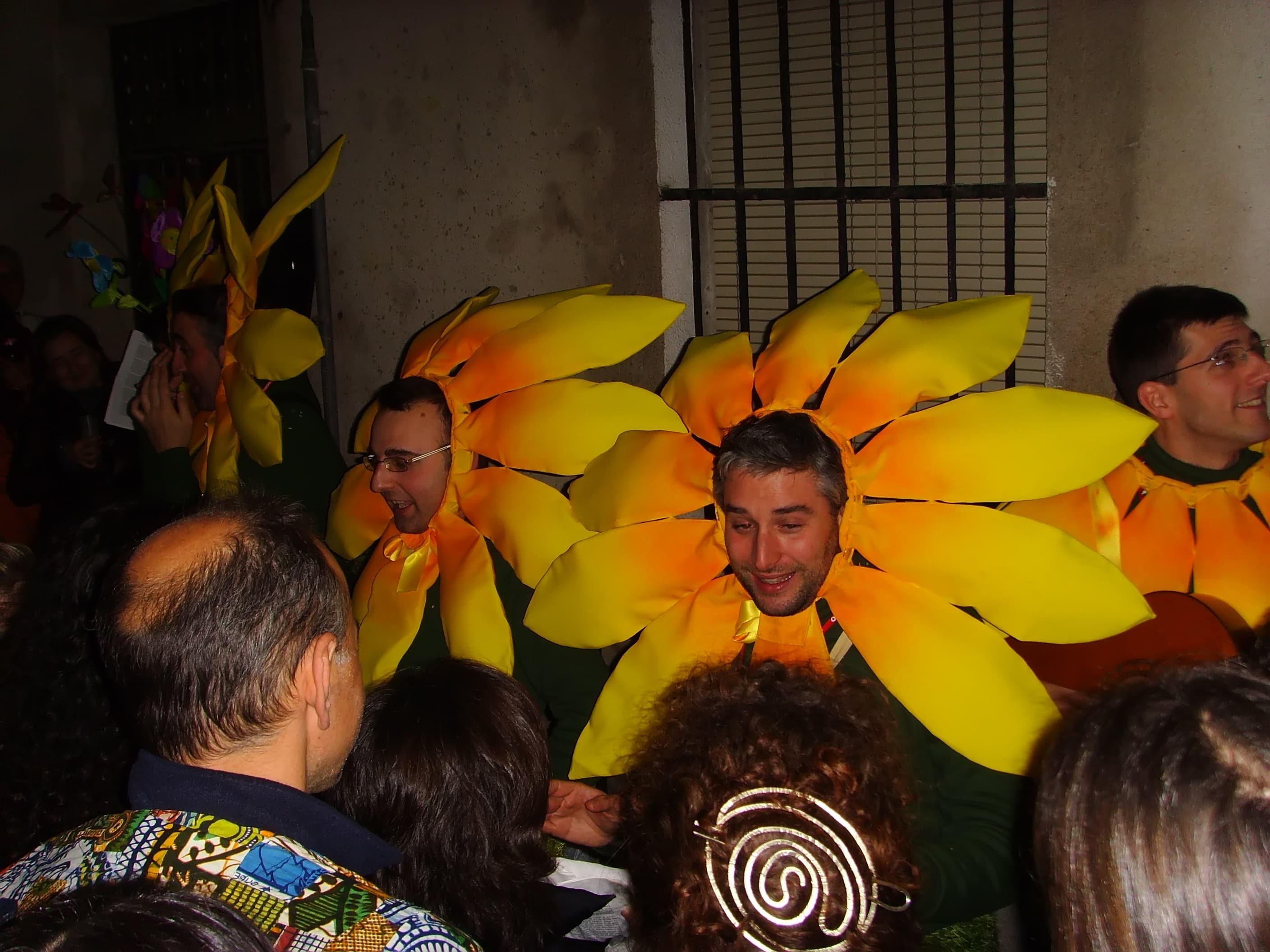
Cádiz Carnival is officially recognized as a Fiesta of International Tourist Interest, and it has nothing to do with float parades. Here, the coupla song rules. Two carnivals run in parallel: the official contest (COAC) at the Gran Teatro Falla, ticketed, and the street carnival, free and stageless, where the so-called "illegal" groups sing on any corner.
Coplas, not floats
First thing to unlearn: this isn't Tenerife or Rio. You won't see giant floats or a beach party; you'll see people singing lyrics. The COAC, the official contest, has four categories worth telling apart. The chirigota goes for humor, with the cuplé as its signature piece. The comparsa does poetic critique and stakes its prize on the pasodoble. The coro sings from flatbeds or floats through the streets, with the tango as its genuine piece. The cuarteto — which in Cádiz can actually have three, four, or five members — lives on spoken parody. All four follow the same skeleton: introduction, pasodobles or tangos, cuplés with a chorus, and a closing popurrí. Critical tip: the humor is local, extremely fast, and packed with Cádiz-specific references. If you're expecting to catch every joke on the first listen, you'll get frustrated — stick with the pasodobles, since those land without needing a translation.
When it falls and how it's organized
This is a moveable feast tied to the liturgical calendar: the only fixed anchor is Ash Wednesday. The COAC kicks off several weeks earlier, with preliminaries in January, and its final is held on the Friday night before the street carnival begins. From there, the street carnival takes over the city around Jueves Gordo (Fat Thursday) and wraps up on Piñata Sunday; the 'carnaval chiquito' (little carnival) runs the following weekend. In practice, all of this falls somewhere between late January and early March depending on the year. Critical tip: don't book anything based on what you read in a blog — or in these lines, for that matter. Confirm the year's program at turismo.cadiz.es or the city's official site, since dates, street closures, and the local ordinance regulating drinking and public toilets change with every edition. And book accommodation months ahead: the city sells out and prices climb.
Where it's really happening
The epicenter is La Viña, the old fishermen's quarter: Plaza del Tío de la Tiza and Calle Virgen de la Palma turn into a seething crowd, and that's where you'll find the erizada and the ostionada, the popular sea urchin and oyster feasts that define the street carnival more than any restaurant could. Santa María, Plaza de las Flores, Plaza de la Catedral, and Cuesta de las Calesas are the other hotspots. Coro carruseles wind through the city center on floats — a regular fixture, though the exact day depends on the official program. For food, go for pescaíto frito (fried fish) and tortillitas de camarones (shrimp fritters), plus the stalls at the Mercado Central selling seafood by weight at midday. Critical tip: in La Viña in the small hours, the crowd density is extreme, and getting out of a square can take twenty minutes. Eat early, stick to the edges if you don't handle crowds well, and don't count on finding a bathroom.
Real logistics and what to wear
Cádiz sits on a narrow isthmus: driving in on the big days is a headache and parking is a waste of time. The sensible option is the C-1 Cercanías train, which links Jerez, El Puerto de Santa María, Puerto Real, and San Fernando with the capital and usually adds night services over Carnival weekend; there's also a catamaran from El Puerto and Rota. Check special schedules on Renfe and with the Consorcio de Transporte Metropolitano Bahía de Cádiz before heading out, since the extra services are published fresh each year. Staying outside the city — in Jerez, El Puerto, or San Fernando — is the realistic move once Cádiz fills up. Critical tip: February cold and rain on the bay are very real, and the wind cuts through in the small hours. Dress warm, wear closed shoes and a light rain jacket — you'll see costumes with thermal leggings underneath, and that's no accident.
Frequently asked questions
Do you have to pay to see Cádiz Carnival?
Do you need to wear a costume?
How do you get tickets for the Falla theater?
Can you go with kids?
Some links on this page are affiliate links: if you book through them, Andelaria may earn a commission at no extra cost to you. Transparency & affiliate policy
Book tickets and tours: Carnaval de CádizPlan your trip
Book the essentials for your trip to Cádiz.
Other places in Cádiz
Catedral de Cádiz
catedralAn 18th-century Baroque-Neoclassical cathedral with a golden tiled dome, a symbol of Cádiz's maritime skyline. Composer Manuel de Falla is buried in its underground crypt. You can climb the Torre de Poniente for a panoramic view over the city and the Atlantic.
Torre Tavira
torreThe city's former watchtower and Cádiz's tallest tower, home to a camera obscura that projects the streets and monuments live onto a circular screen in real time. From its terrace you can pick out the roughly 130 watchtowers dotting the city's rooftops, a legacy of Cádiz's trading past with the Americas.
Playa de La Caleta
playaA small urban beach between the San Sebastián and Santa Catalina castles, the city's most iconic and the setting for a James Bond scene. Its fine sand, the Balneario de la Palma promenade and the sunset views make it a must, though it fills up fast in summer.
Castillo de Santa Catalina
castilloA star-shaped fortress built in the late 16th century after the Anglo-Dutch attack of 1596, standing right by La Caleta beach. Today it hosts temporary exhibitions and offers one of the best free viewpoints over the Atlantic and the old town.
Teatro Romano y Barrio del Pópulo
barrioCádiz's oldest quarter, with remains of the city's medieval gates (Arco de los Blancos, del Pópulo and de la Rosa) and, beneath its houses, the second-largest Roman theatre in Hispania, dating from the 1st century BC. Its narrow streets pack in more than three thousand years of urban history.
Mercado Central de Abastos
mercadoA neoclassical food market from 1838, one of Spain's oldest, ringed by a stone colonnade. Stalls selling fish and shellfish fresh off the bay, fried-fish counters and tapas bars make this market a living portrait of Cádiz's food culture.
Semana Santa de Cádiz
fiestaAbout 30 brotherhoods make their official penitential walk to Cádiz Cathedral, and the whole official route fits inside the old town: Calle Nueva, San Juan de Dios, Pelota and Plaza de la Catedral. The date moves every year, from Palm Sunday to Easter Sunday. Watching the processions from the street costs nothing.
Similar places in other cities
Semana Santa de Sevilla
SevillaSeville's Holy Week is free and open to all: you only pay for seats and grandstands along the Official Route. In 2026 it runs from 29 March to 5 April, with the eve celebrations on the 27th. Its peak is La Madrugá, when five major brotherhoods process from 1:00 a.m. until noon.
Feria de Abril de Sevilla
SevillaTwo weeks after Easter, Sevilla sets up its Real in Los Remedios: around 1,059 casetas (up to ~1,250 plots with the expansion), flamenco dresses, horses and sevillanas. Entry is free, but most are private and only accessible with an invitation from a member. Only around 14–16 are open to the public.
Velá de Santiago y Santa Ana
SevillaSeville's oldest festival, with more than 750 years of history, doesn't take place in the city centre — it happens in Triana. The Velá de Santa Ana falls in the last week of July, around the 26th: free casetas along the Guadalquivir, the cucaña grease-pole contest over the river, and not a flamenco dress or equestrian parade in sight.