Feria de Pedro Romero (Corrida Goyesca)
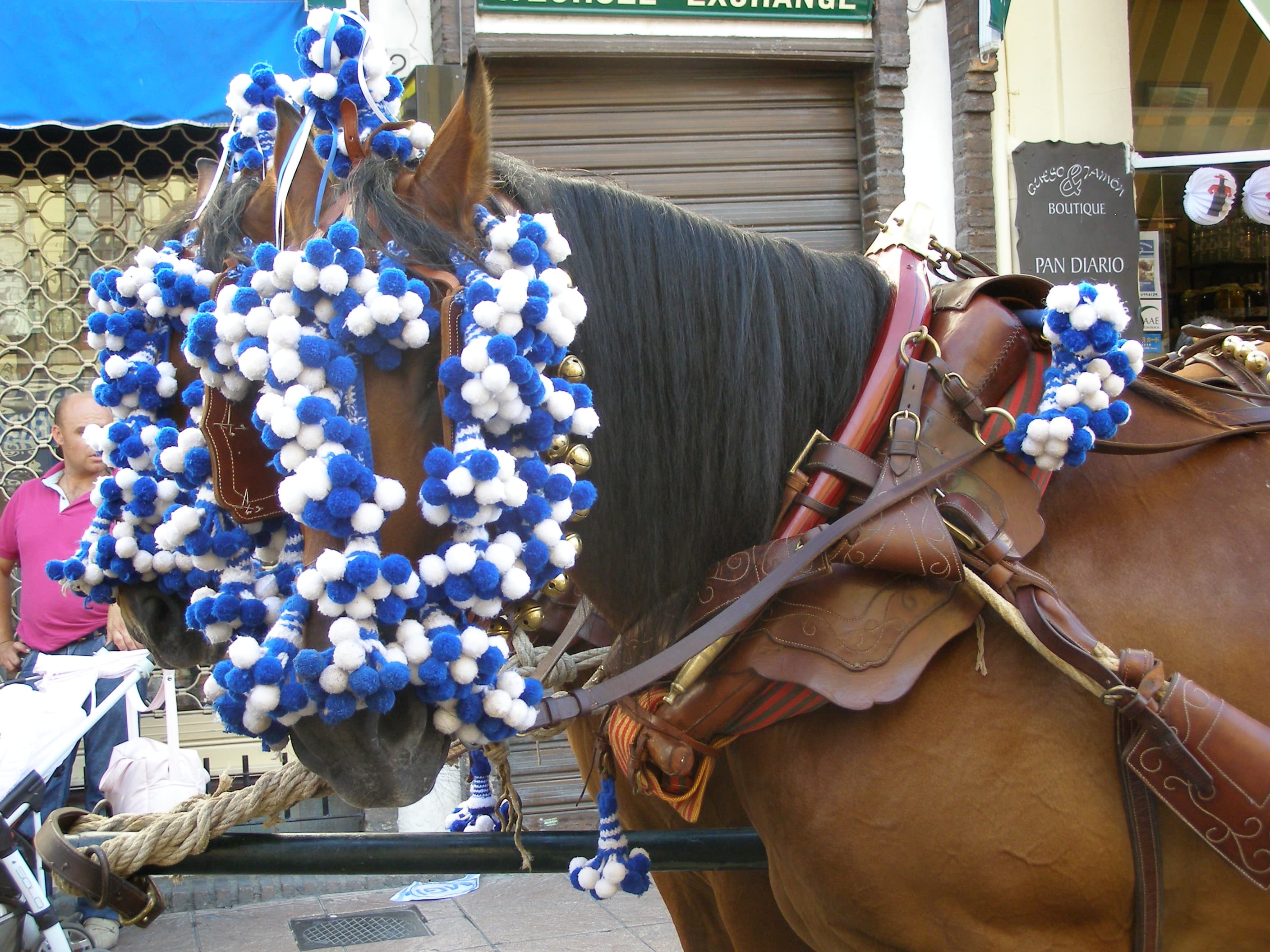
Ronda's biggest fair fills the first week of September (September 1–6 in 2026) and peaks with the Corrida Goyesca: bullfighters and spectators dressed in 18th-century style inside a bullring built in 1785. The fairground itself is free; the bullfighting events are ticketed and sell out within hours.
What the Feria de Pedro Romero is
This is Ronda's biggest fair, held in the first week of September (September 1–6 in 2026), centered on the Real at the Ángel Harillo fairground: twelve casetas run by local peñas coordinated by ASOPE, plus three youth areas. Everything revolves around Pedro Romero, the 18th-century Ronda-born bullfighter who founded one of Spain's most influential bullfighting dynasties. Ahead of the fair itself there's a run of events: the opening speech (pregón) at the Auditorio Blas Infante, the Festival de Cante Grande, the Galas Internacionales de Folklore, and the costume-and-carriage (enganches) competition. Practical tip: separate what's free from what isn't. Getting into the Real, watching the street events, the pregón, and the carriage parade costs nothing; food and drinks at the casetas do, and all three bullfighting events require paid tickets. The exact program is published by Ronda's city council (ayuntamientoronda.es) weeks in advance — don't assume it matches a previous year's.
The Goyesca: why it's one of a kind
The Corrida Goyesca was created in 1954 for the bicentenary of Pedro Romero's birth, driven by Cayetano Ordóñez; Antonio Ordóñez joined for the second edition in 1957 and turned it into a fixture of the bullfighting calendar. What sets it apart is the look: bullfighters dressed in Goya-style costume, echoing the 18th-century aesthetic Goya painted, with much of the audience — women included — also in period dress, all inside a ring built in 1785. It's held on Saturday afternoon, with a mounted bullfighting (rejones) event that same morning and a novillada the day before. Practical tip: don't confuse it with Spain's other 'goyescas' — a similar tradition exists at other bullrings, but this is Ronda's own. And expect the ticket to be the real bottleneck: in 2026 it sold out through official channels in March, in under 24 hours. Official channel: riveraordonez.com and the Plaza de Toros box office (Avenida Virgen de la Paz). Any other website is resale.
The 1785 bullring and its reopening
The Real Maestranza de Caballería agreed to build it in 1754; work began in 1779 and it opened on May 19, 1785 — tradition says with Pedro Romero and Pepe-Hillo (José Delgado) on the bill. It was designed by José Martín de Aldehuela, the same architect behind the Puente Nuevo. It's neoclassical, built in sandstone, with a double gallery of arcades on Tuscan columns and no open-air stands: the cloister-like feel recalls the circular courtyard of the Palacio de Carlos V at the Alhambra. The ring measures 66 meters across, with two five-row tiers resting on 136 pillars forming 68 arches. It closed in June 2024 over structural issues, and the restoration — three million euros, overseen by a committee chaired by Rafael Moneo — took over a year; it reopened for the 2026 fair. Practical tip: it's open to visit with a ticket (bullfighting museum and ring, run by the Real Maestranza, rmcr.org), but on fair days tourist visits are altered or suspended. Check rmcr.org before you go.
The fair without the bulls
If bullfighting isn't your thing, the fair still delivers. Getting into the Real at the Ángel Harillo fairground is free: casetas decked out in Andalusian style, shaded areas — which matter, since September in Ronda still bites at midday — and nights that run into the small hours. Outside the fairground you've got the Festival de Cante Grande, the Galas Internacionales de Folklore, and the carriage competition, with horses and traditional dress out on the streets. Practical tip on logistics: Ángel Harillo sits outside the town center, so skip the car. Ronda has a train station (Algeciras–Bobadilla line, with connections from Málaga, Granada, and Madrid) and a bus station, and the city council runs a special transport setup each fair — tourist mini-trains for €1 a ride to the fairground gate, three bus lines, and a shuttle from the Ronda Norte health center (figures from the previous edition; the 2026 details are published days ahead at ayuntamientoronda.es). Book accommodation months out, or stay in Málaga, Marbella, or Setenil and come for the day.
Frequently asked questions
When is the Feria de Pedro Romero held?
Do you need a ticket for the fair itself?
How do I get tickets for the Corrida Goyesca?
Can you visit the bullring during the fair?
Some links on this page are affiliate links: if you book through them, Andelaria may earn a commission at no extra cost to you. Transparency & affiliate policy
Book tickets and tours: Feria de Pedro Romero (Corrida Goyesca)Plan your trip
Book the essentials for your trip to Ronda.
Other places in Ronda
Puente Nuevo
puenteRonda's ultimate icon: an 18th-century stone bridge spanning the 98-metre Tajo gorge that separates the old town from the new. Its Casa del Puente, once a jail inside the central arch, is now an interpretation centre. The views from the nearby lookouts are the most photographed in Andalusia.
Plaza de Toros de Ronda
plazaOne of the oldest bullrings in Spain (1785), birthplace of the Romero family's Escuela de Tauromaquia Rondeña. Its neoclassical two-storey architecture with Tuscan columns, plus a bullfighting museum with carriages and matador costumes, make it a must-see, bullfighting fan or not.
Baños Árabes de Ronda
banosBuilt in the 13th century beside the Guadalevín river, these are among the best-preserved Arab baths in Spain, with cold, warm and hot rooms covered by star-shaped vaulted ceilings. They retain their original hydraulic system, along with a nearby waterwheel that once raised water from the stream.
Casa del Rey Moro y sus jardines
jardinAn 18th-century house on Arab foundations, with gardens designed by Jean-Claude Nicolas Forestier and La Mina, a 14th-century staircase carved into the rock that descends to the Guadalevín river to supply the city with water in case of siege.
Iglesia de Santa María la Mayor
iglesiaThe former main mosque of Islamic Ronda, converted into a Christian church after the 1485 conquest. It blends Gothic, Renaissance and Baroque styles, still holds its original mihrab, and overlooks the Plaza Duquesa de Parcent, the heart of La Ciudad.
Alameda del Tajo y mirador del Tajo
miradorA tree-lined 19th-century promenade on the edge of the gorge, with lookouts hanging 100 vertiginous metres over the Tajo and views across the mountain range and the Sierra de las Nieves. The perfect spot to understand why Ronda is called the 'city of gorges'.
Semana Santa de Ronda
fiestaFourteen brotherhoods parade fifteen processions through Ronda's old town between Palm Sunday and Easter Sunday (in 2026, from March 29 to April 5). Watching the floats pass in the street is free: they cross La Ciudad and El Mercadillo through narrow lanes, centered on Plaza Duquesa de Parcent and Santa María la Mayor. Check the official schedule each year.
Similar places in other cities
Semana Santa en Málaga
MálagaMálaga's Holy Week fills the historic centre with floats weighing up to 4,200 kg, carried by hundreds of men and women bearers. It is free and street-based: from Palm Sunday to Easter Sunday (in 2026, 29 March to 5 April). Its distinctive sound — bugles and drums — was born here in 1911.
Feria de Málaga (Feria de Agosto)
MálagaThe Feria de Málaga is actually two free fairs in one: the daytime fair in the city centre (Calle Larios, 12:00–18:00) and the nighttime fair at the Real del Cortijo de Torres, with around 120 casetas (marquees) with free entry. In 2026 it runs from 15 to 22 August, commemorating the entry of the Catholic Monarchs into Málaga in 1487.
Festival de Málaga — Cine en Español
MálagaThe Málaga Festival is Spain's leading Spanish-language film festival after San Sebastián. Its 29th edition ran from 6 to 15 March 2026 and drew around 111,000 attendees. It is a ticketed event: galas and screenings require a paid entry, except for the free summer programme Cine Abierto.